
Tracepoint Insights
Expert analysis and commentary on investigations, OSINT, and corporate risk intelligence — designed to help organizations make informed, ethical decisions
Are Screenshots Enough Evidence in a Workplace Investigation?
Screenshots can be useful in workplace investigations, but they may be incomplete, misleading, altered, or missing context. Tracepoint helps assess digital evidence before decisions are made.
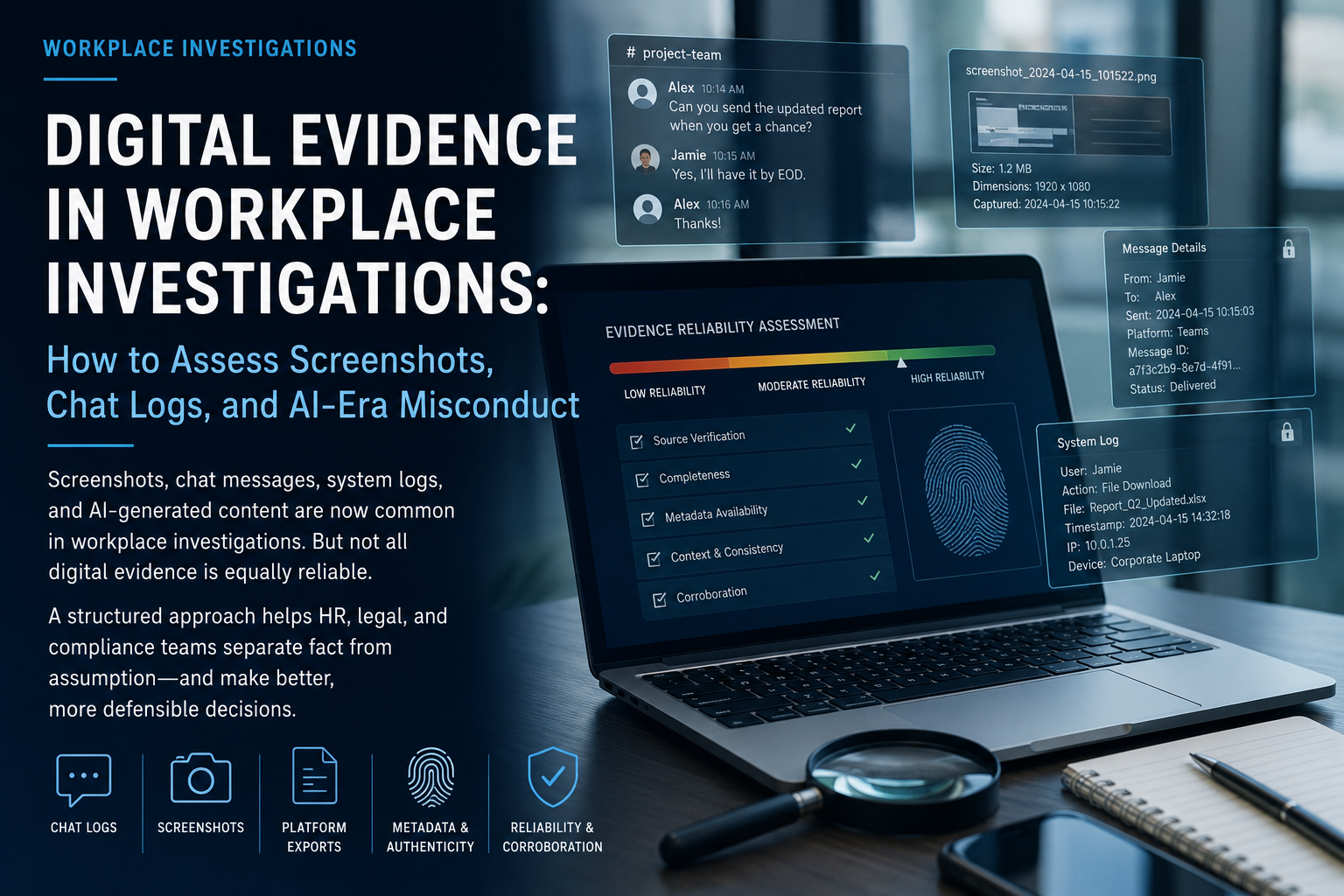
Digital Evidence in Workplace Investigations: How to Assess Screenshots, Chat Logs, and AI-Era Misconduct
Screenshots, chat logs, system records, and AI-generated content are now common in workplace investigations — but not all digital evidence is equally reliable. This article explains how HR, legal, and compliance teams can assess digital evidence for source, context, completeness, metadata, and corroboration before making decisions.

Digital Evidence in Workplace Investigations: Standards for Defensible Collection and Analysis
Digital evidence now underpins many workplace investigations, yet its reliability depends on how it is identified, preserved, and analyzed. Screenshots, messages, online content, and AI-generated material can be incomplete or misleading without proper evidentiary handling. This article outlines standards for defensible digital evidence collection and analysis in employment investigations, helping employers and counsel strengthen the integrity and credibility of investigative findings.
When Digital Evidence Complicates a Workplace Investigation
What looks like a routine workplace complaint at intake can become far more complex when the facts depend on screenshots, anonymous messages, fragmented digital records, or online conduct with workplace implications. This article explores how early assumptions, weak evidence handling, and poor scoping can quietly increase risk for HR, legal, and corporate decision-makers.
AI Misconduct in the Workplace: A Defensible Investigation Framework for Employers
Artificial intelligence tools are introducing new categories of workplace misconduct risk, from confidential information exposure to AI-generated work product and policy circumvention. These matters require investigation approaches that go beyond traditional interviews and document review. This article outlines principles for conducting defensible AI-misconduct investigations using structured digital evidence and attribution methods aligned to employer and legal expectations.

Employee Activity Monitoring Risks: Digital Evidence Challenges in Workplace Investigations
Digital activity signals like status indicators and login time are often treated as evidence in workplace investigations. But when activity can be simulated, those signals can mislead. This article explores how to assess digital evidence reliability and build defensible, evidence-based decisions.

The Invisible Influences: How Power, Psychology, and Structure Shape Investigative Truth
Investigations are shaped by invisible forces — power, psychology, structure, disclosure, and digital behaviour. This Insight explores how these factors influence truth long before findings are made.

Scaffolding the Truth: How Investigative Structure Determines the Outcome
Investigative success depends less on interviews and more on structure. This Insight explores the scaffolding behind a defensible investigation — timelines, evidence design, interview strategy, and context — and how structure determines the truth.

Assumption Drift: The Quiet Force That Weakens Investigations
Assumption drift is the quiet force that weakens investigations. This Insight explores how small, unnoticed assumptions reshape timelines, digital evidence, interviews, and findings — and how to prevent it.

Structural Weakness in Investigations: Hidden Flaws That Escalate Organizational Risk
Most investigations fail early due to structural weaknesses, not major mistakes. This Insight breaks down the hidden timeline, evidence, and interview flaws that quietly escalate organizational risk.

Accumulated Errors: The Small Investigative Mistakes That Quietly Derail Cases
Small investigative mistakes rarely feel significant in the moment, but together they weaken timelines, credibility, and findings. This Insight breaks down the micro-errors that accumulate into major risk - and how to prevent them.

Early Warning Signs of Workplace Misconduct: The Subtle Clues Leaders Miss
Early warning signs rarely look dramatic, but they reveal more than organizations realize. This Insight explores the subtle behavioural, digital, and timeline clues that quietly signal investigative risk long before a complaint is filed.
The scenarios and file-style examples on this site are educational illustrations. They are not presented as Tracepoint client matters, case studies, or summaries of paid engagements unless expressly identified as such.